
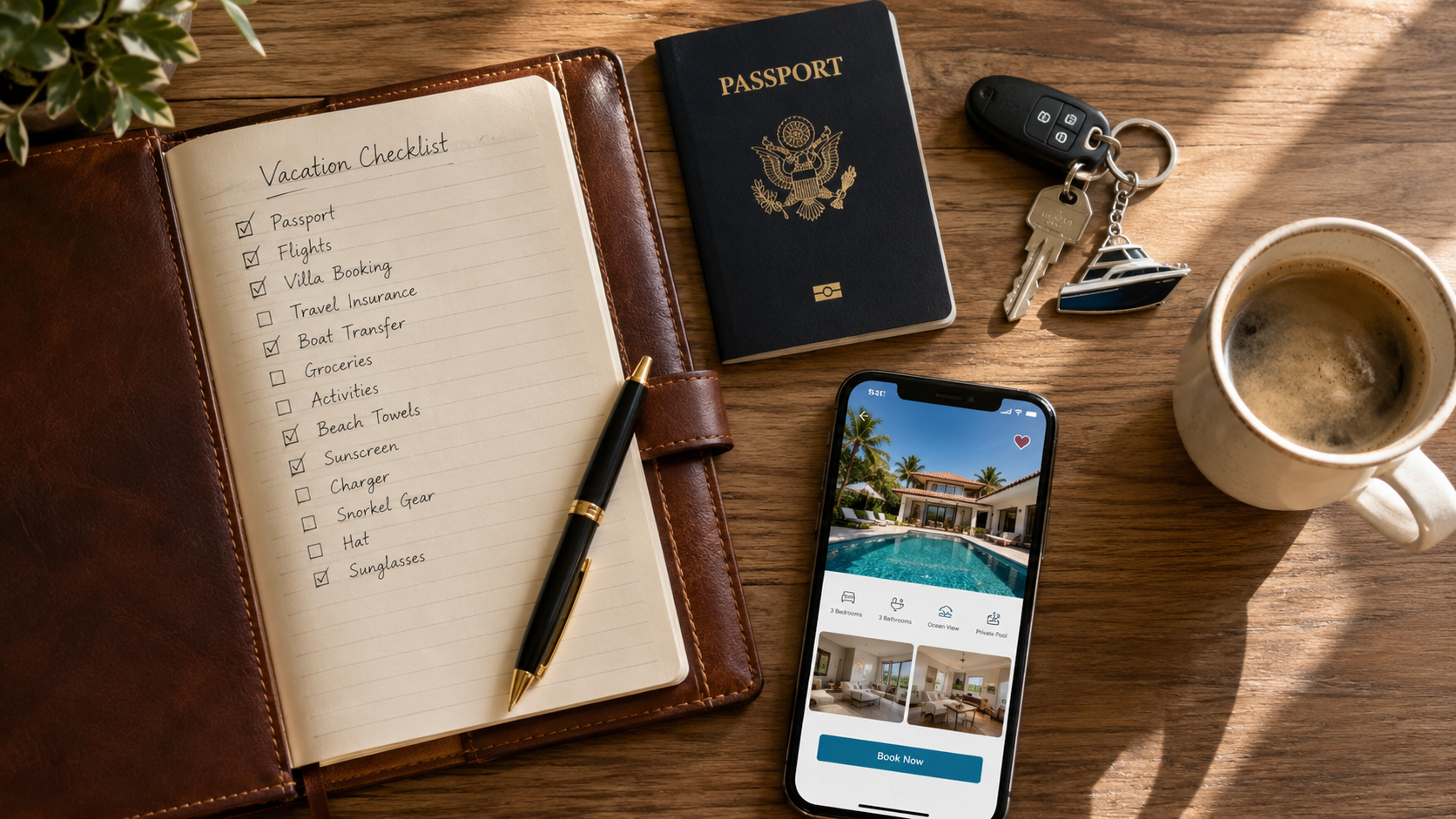
After years of stepping off boats and into shoreside accommodation that ranged from spectacular to deeply regrettable, I have developed a checklist. It is not the kind of checklist you will find in any travel magazine, because it is written by someone whose standards have been shaped by living in a space the size of a parking spot for weeks at a time. Normal travellers care about thread count. Sailors care about water pressure.
This is the checklist I run through every time I book a place to stay ashore. It has never let me down, and it has saved me from several stays that would have been worse than sleeping on the boat.
Proximity to the Boat
This is non-negotiable for any sailor who is leaving their vessel in a marina or at anchor. You need to be close enough to check on the boat without it becoming an expedition. Ideally, within walking distance of the harbour. If you can see the mast from your window, even better. There is a particular anxiety that comes from leaving a boat unattended, and the further away you are, the worse it gets. Being able to stroll down to the pontoon after dinner to check the lines and bilge is worth more than any five-star amenity.
The Shower Test
I cannot overstate how important this is. After weeks of boat showers, where the water is lukewarm at best and the pressure would embarrass a garden hose, a proper shower is the single greatest luxury of coming ashore. Before booking anywhere, I check reviews specifically for mentions of water pressure and hot water reliability. A beautiful villa with a dribbling shower is a beautiful villa I will not be returning to.
Laundry Facilities
Every sailor arriving ashore has a bag of laundry that could probably walk to the machine on its own. In-house laundry facilities are ideal. A washing machine and somewhere to hang things in the sun is all you need. If the accommodation does not have its own facilities, you need to know where the nearest launderette is before you check in. This is not optional. This is urgent.
Kitchen Quality
A kitchen is not a kitchen just because it has a microwave and a kettle. Sailors want to cook. We have been eating one-pot meals on a gimballed stove for weeks, and the opportunity to use a full kitchen is something we take seriously. Sharp knives, decent pans, a stove with more than two burners, and a refrigerator that actually keeps things cold. These are the basics. A good cutting board and a corkscrew complete the picture.
Outdoor Space
Sailors live outdoors. On the boat, the cockpit is the living room, the dining room, and the office. Coming ashore to a place with no outdoor space feels like going below decks permanently. A terrace, a balcony, a garden, anything that lets you sit outside with a coffee and feel the air on your face. Bonus points if you can see the water from it.
Ventilation Over Air Conditioning
This might be controversial, but most sailors prefer a place that breathes over a sealed box with a split unit. Cross-ventilation, ceiling fans, and windows that actually open are worth more than the most powerful air conditioner. We are used to sleeping with the sound of the wind and the water. A hermetically sealed room with recycled air and the hum of a compressor is nobody's idea of rest.
Flexible Check-in
Sailors do not arrive on schedule. Weather delays, customs clearance, and the simple unpredictability of life on the water mean that your arrival time is always approximate. Accommodation that insists on a two o'clock check-in with no flexibility is accommodation designed for people who arrive by car. Look for places with key safes, self-check-in, or hosts who understand that the sea does not run to a hotel's timetable.
The sailor's checklist is simple because a sailor's needs are simple. We do not need luxury. We need the things that weeks at sea have denied us, delivered reliably and without fuss. Get those right, and the stay will be remembered as fondly as the best anchorage on the voyage.